



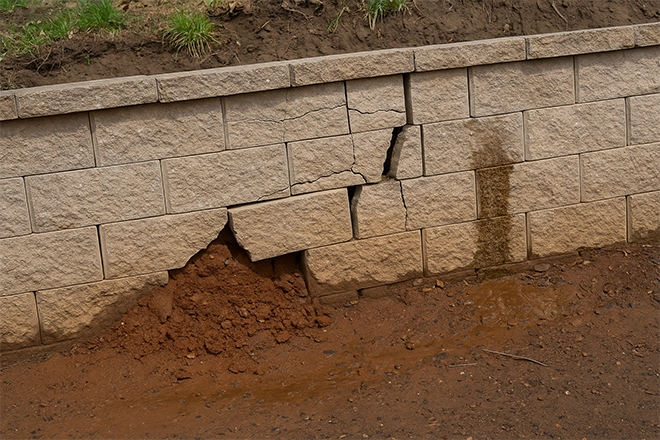
Retaining walls are one of the strongest structural elements in a landscape, but even the best-built walls can show signs of stress over time. Many homeowners don’t notice a problem until the wall is visibly leaning or cracking — and by that stage, repairs can be extensive and expensive. The good news is that retaining walls almost always show warning signs long before a major failure happens.
At Vicente Outdoor Living, we build and restore retaining walls built for long-term strength. Here are the subtle signs homeowners should watch for — and what they mean.
A leaning wall is the clearest sign of structural movement.
Even a small tilt should be evaluated.
Cracks don’t just happen — they reveal underlying stress.
Small cracks can quickly lead to separation.
If part of the wall bulges outward, the soil is pushing too hard.
This is a major warning sign that needs immediate attention.
Water should never be trapped behind a retaining wall.
Water pressure is the #1 cause of wall failure.
Erosion indicates water is moving where it shouldn’t.
Erosion weakens the wall’s stability.
Shifting blocks are never “normal.”
Small gaps become large separations fast.
The caps at the top of the wall act like a warning flag.
It’s often the first sign homeowners notice.
Roots can exert enormous pressure.
Tree root pressure accelerates wall failure.
If the ground above the wall is sinking, the soil is unstable.
This means the wall is losing its ability to hold back the earth.
Rust can indicate issues with metal reinforcement behind the wall.
Rust is more than a cosmetic issue.
Weep holes relieve water pressure.
…the wall may be experiencing dangerous hydrostatic buildup.
Retaining wall standards have improved significantly.
Even if the wall looks fine, age alone can be a risk factor.
Catching problems early:
A failing retaining wall only gets worse with time — never better.
If you notice:
…it’s time for a professional inspection. Most issues can be corrected long before replacement is needed.
A stable, well-built retaining wall protects your yard and enhances your landscape. Whether you need repairs, reinforcement, or a brand-new wall, professional craftsmanship makes all the difference.
At Vicente Outdoor Living, we build retaining walls with proper engineering, drainage, and long-lasting materials.

Tell us what you’re seeing, and we’ll provide a safe, durable solution tailored to your property.


