



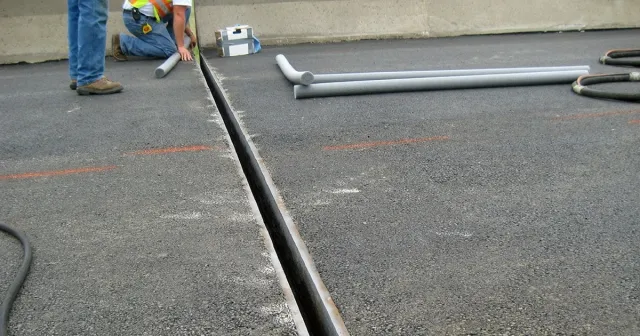
Most homeowners assume concrete cracks because of poor installation — and sometimes that’s true. But even perfectly installed concrete will crack if it doesn’t have proper expansion joints. These small, purposeful gaps are one of the most important structural components of any concrete project, yet they’re rarely talked about.
At Vicente Outdoor Living, we build concrete patios, walkways, driveways, and pads with the correct expansion layout to ensure long-lasting performance. Here’s what homeowners should know about expansion joints, why they matter, and what happens when they’re ignored.
Concrete expands and contracts with temperature changes.
Without joints, the slab cracks randomly.
Joints don’t stop cracking — they direct it.
Controlled cracking is the goal.
Soil expands, contracts, and shifts — especially in Texas and similar regions.
This prevents slab stress and structural damage.
Improper spacing is a common reason concrete fails.
Concrete slabs should have joints spaced no more than 2–3 times the slab thickness in feet.
Example:
A 4-inch slab → joints every 8–12 feet
Correct spacing prevents unpredictable cracking.
Intentional weakened lines cut into the slab.
Flexible material placed between slabs or between concrete and other structures.
Where two concrete pours meet.
Knowing where each type belongs keeps slabs stable.
Control joints must be cut at the right time — not too early and not too late.
Edges crumble.
Cracks already form.
Timing matters for professional results.
A shallow joint is almost useless.
At least ¼ of the slab thickness
This ensures cracking happens along the joint, not elsewhere.
If joints are:
…the concrete will crack in random, noticeable ways.
Planning must happen before the pour.
When concrete touches:
…it needs expansion joints to prevent pressure transfer.
Skipping these joints can cause damage to both the slab and the structure.
Concrete without joints tends to crack diagonally or in unpredictable patterns.
A clean joint grid enhances curb appeal.
Expansion joints can be filled with:
This prevents:
Maintained joints protect the entire slab.
Concrete with a correct joint system lasts significantly longer.
It’s small details like joints that make a big difference.
Proper joints improve:
They are essential for reliable, long-lasting concrete work.
Concrete is only as good as its preparation — and expansion joints are one of the smartest investments you can make for long-term performance.
At Vicente Outdoor Living, we design concrete projects with proper joint placement, spacing, and depth to ensure clean appearance and structural strength.
Tell us your project needs, and we’ll create a concrete design that performs beautifully with the right joint system.

Tell us your project needs, and we’ll create a concrete design that performs beautifully with the right joint system.


