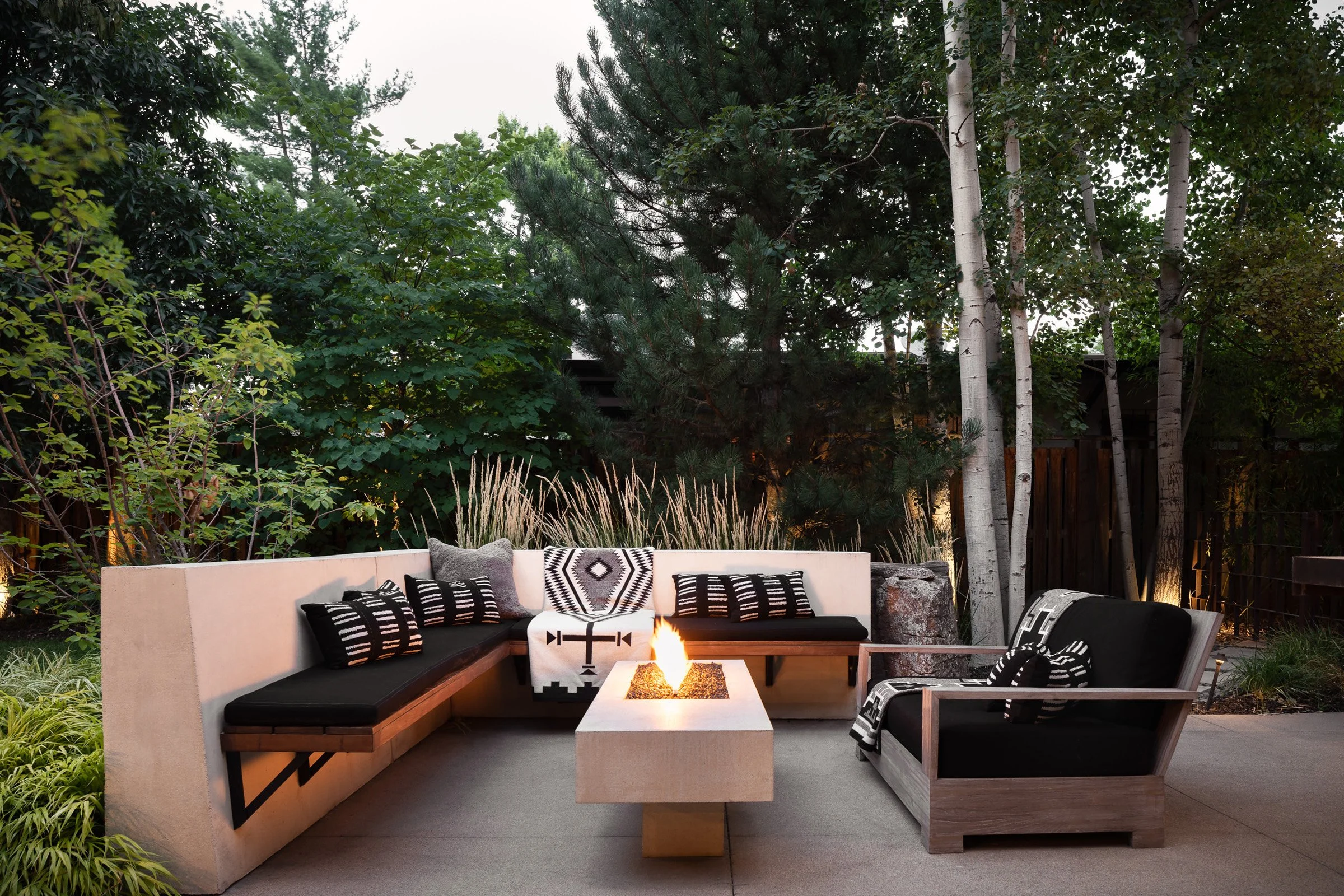
Fire features bring warmth, atmosphere, and a natural gathering point to any outdoor space. But one of the most important decisions — and one homeowners often overlook — is where to put the fire pit or outdoor fireplace. Placement affects safety, comfort, usability, airflow, and how well the feature integrates with the rest of your backyard.
At Vicente Outdoor Living, we design fire features that are both stunning and practical. Before choosing your fire pit or fireplace location, here’s what you need to know.
1. Keep Fire Features Away From Overhead Structures
Fire pits and fireplaces generate high heat that can damage structures.
Avoid placing them directly under:
- pergolas
- patio covers
- low tree branches
- overhangs
A clear open sky is safest unless you’re installing a specially designed, vented unit.
2. Consider Wind Direction Before Finalizing Placement
Wind can make a beautiful fire pit experience uncomfortable.
Professionals evaluate:
- the dominant wind patterns
- open yards vs. enclosed yards
- airflow around nearby buildings
- natural windbreaks
The right placement keeps smoke away from seating and your home.
3. Leave Enough Clearance Around the Fire Feature
Safety spacing prevents accidents.
General clearances:
- at least 10 feet from structures
- 3–4 feet behind seating
- 6 feet from walkways
- minimum 20 feet from propane tanks
Spacing ensures comfort and reduces risk.
4. Think About Seating Layout Before Choosing the Spot
Your fire feature placement determines how seating will fit.
Plan for:
- comfortable walking space
- clear entry points
- enough room for chairs or built-ins
- balanced visual flow
A fire pit that’s too close or too far feels awkward.
5. Don’t Place Fire Features Too Close to the House
This is a common mistake that impacts both safety and comfort.
Too-close fire features can cause:
- smoke drifting indoors
- heat damage to siding
- fire hazards
- overcrowded patios
Moving it just a few feet further makes a huge difference.
6. Consider Views and Sightlines
A fire feature should be beautiful from every angle.
Ideal placement offers:
- visibility from the patio
- a focal point for seating areas
- alignment with outdoor kitchens or pergolas
- symmetry with surrounding elements
It should anchor your outdoor space.
7. Think About Traffic Flow and Pathways
Your fire feature shouldn’t block natural movement.
Avoid placing it:
- in front of doors
- in narrow walkways
- where people cut through seating
Flow matters for gatherings and everyday use.
8. Choose the Right Surface Beneath the Fire Feature
The wrong surface can cause damage or safety hazards.
Best surfaces include:
- pavers
- stone
- concrete
- gravel
Avoid placing fire features on wood decks unless they’re specifically rated and protected.
9. Built-In vs. Portable Fire Pits Require Different Placement Considerations
Built-in fire pits:
- require proper ventilation
- become permanent features
- need safe clearances
Portable fire pits:
- offer flexibility
- still require safe, level surfaces
- should be moved away from structures
Your choice impacts placement strategy.
10. Outdoor Fireplaces Need More Depth and Structural Support
Fireplaces require more planning.
They need:
- a deeper footprint
- reinforced concrete pads
- strategic wind considerations
- alignment with seating areas
A fireplace acts as an architectural centerpiece.
11. Gas vs. Wood Fire Features Affect Placement
Gas fire features:
- can be placed closer to structures
- need gas line routing
- produce no sparks
Wood-burning features:
- require extra clearance
- produce embers
- need wind coordination
Know which type fits your lifestyle before choosing the location.
12. Lighting Around Fire Features Improves Safety and Atmosphere
Good lighting makes nighttime use safer and more beautiful.
Ideal lighting includes:
- step lights
- pathway lighting
- uplights for landscaping
- soft ambient lighting
Firelight alone isn’t enough for safe navigation.