



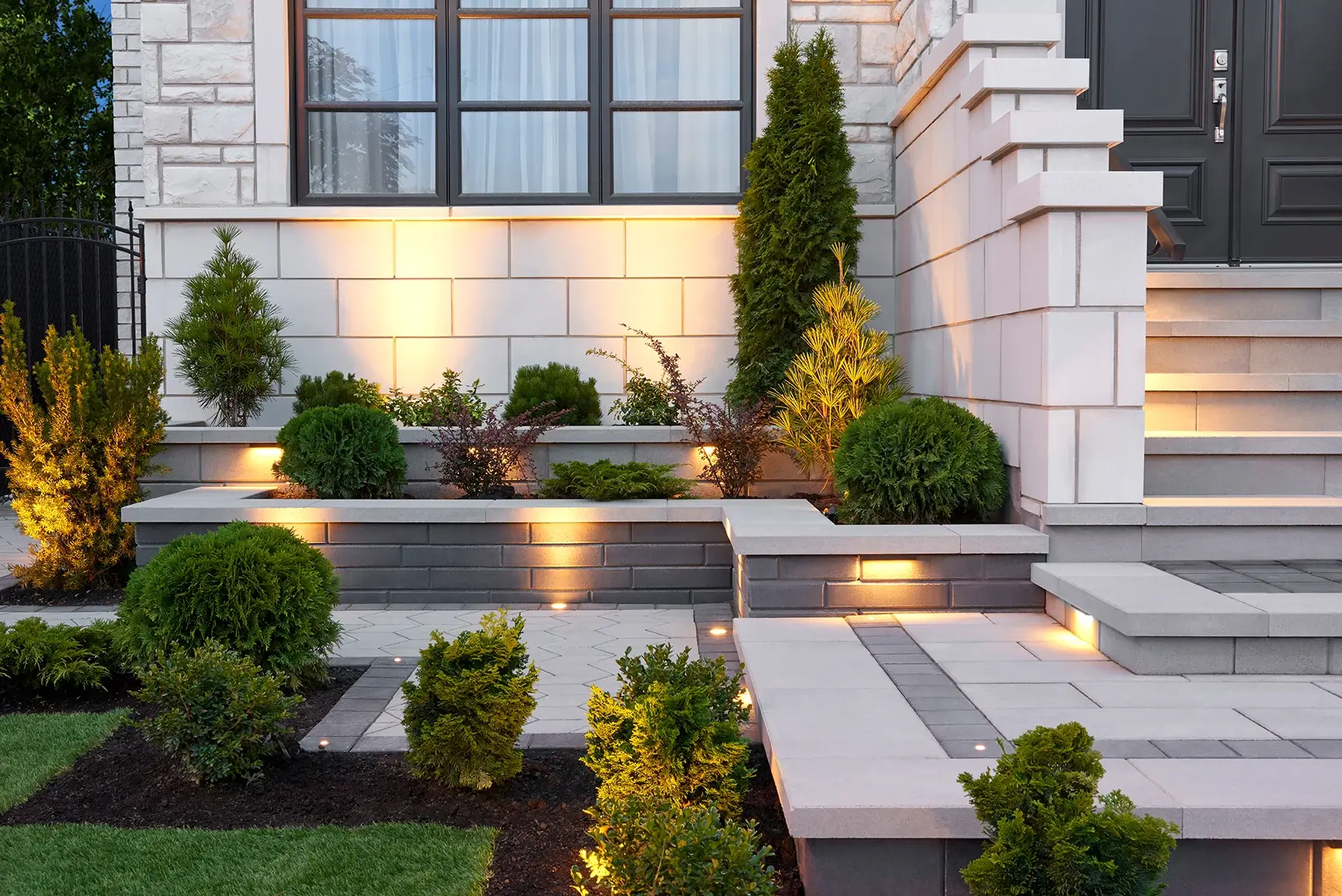
Not every backyard is flat — and that’s actually a good thing. Sloped or uneven yards offer incredible opportunities for creative, multi-level outdoor living designs. The key to unlocking that potential? Retaining walls.
Retaining walls do more than hold soil in place. They add structure, create usable spaces where none existed, prevent erosion, and bring dimension to your yard. At Vicente Outdoor Living, we design retaining walls that turn challenging terrain into stunning, functional outdoor environments.
Here’s how retaining walls can transform any yard into a layered, polished, multi-level outdoor space.
If your yard has a steep incline, it can be difficult to use — especially for patios, play areas, or outdoor living features.
This allows you to turn a once-unusable hillside into a fully functional outdoor layout.
Flat yards can sometimes feel one-dimensional. Multi-level yards have personality and architectural appeal.
This gives your backyard a custom, high-end feel.
Creating different zones helps your outdoor space feel more organized and intentional.
Each level feels like its own distinct space, yet still part of a cohesive design.
Without retaining walls, it’s nearly impossible to build a safe, stable patio on a slope.
The result is a safe, solid patio built into the terrain.
Sloped yards often suffer from runoff, soil movement, and pooling water.
Integrated drainage systems ensure the space stays beautiful and functional.
Walls aren’t just functional — they can be beautiful features in your landscape.
Stone textures and colors add personality to the space.
A retaining wall can double as convenient, permanent seating around:
This saves space while adding comfort and style.
If your home’s elevation doesn’t match your yard’s elevation, retaining walls bridge the gap beautifully.
Smooth transitions make the space easy and enjoyable to use.
Tiered retaining walls create perfect planting areas.
Planting on different levels makes your landscape look richer and more dynamic.
Loose soil, steep drop-offs, and uneven elevations can be hazardous.
A safe yard is a more usable yard.
Steps built into retaining walls help you navigate multi-level spaces easily.
Steps bring structure and elegance to your yard.
Retaining walls must be engineered correctly to stay in place — especially multi-level designs.
A well-built wall can last decades and maintain its beauty.

Tell us your goals, and we’ll design a layered, functional outdoor environment you’ll love spending time in.


