



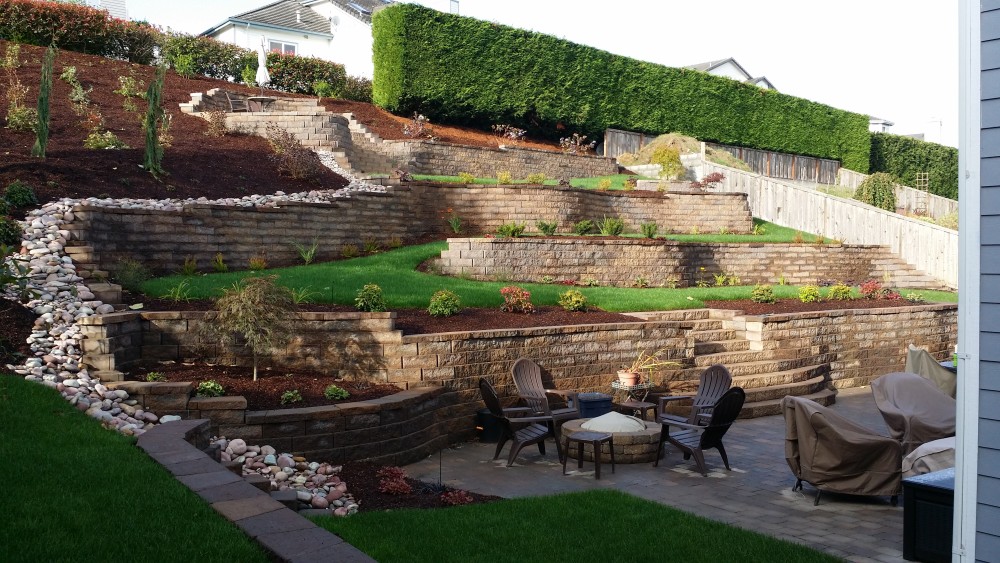
Retaining walls are well-known for adding structure and beauty to outdoor spaces, but one of their most important benefits often gets overlooked: drainage control. Water is one of the biggest threats to a home’s foundation, landscaping, and hardscaping. Without proper management, it can cause erosion, flooding, soil shifting, and costly damage.
At Vicente Outdoor Living, we design retaining walls that do more than look good — they actively protect your property from water issues, stabilize your soil, and create long-lasting support. If your yard struggles with drainage, here’s how retaining walls can make a dramatic difference.
Rainwater naturally flows downhill, taking soil with it. Over time, that erosion can destroy landscaping, weaken foundations, and damage hardscaping.
With erosion under control, your yard stays functional and visually appealing.
Improper drainage around your home can lead to foundation issues, pooling water, and costly structural damage.
This protects your home and surrounding hardscape.
If your yard has dips, low spots, or areas where water consistently pools, a retaining wall can help reshape the terrain.
It transforms problematic areas into usable space.
Good drainage depends on proper yard grading — and retaining walls make grading possible in yards where the natural slope doesn’t cooperate.
Correct grading ensures water moves exactly where it should.
The best retaining walls don’t just block soil — they integrate engineered drainage solutions.
These features ensure water drains safely without building up behind the wall.
When water builds up behind a retaining wall, it creates hydrostatic pressure — an invisible force that can push walls forward or cause them to fail.
A well-engineered wall withstands pressure and remains structurally sound for decades.
Water that flows freely across your yard can weaken hardscapes over time.
They channel water away from these structures, preventing cracks and shifting.
One of the hardest parts of dealing with drainage issues is unpredictability — where will water go when it rains hard? How fast will it move?
Instead of water spreading unpredictably, it follows a safe, intentional path.
Landscaping and retaining walls work together to improve water flow.
With layered landscaping, your yard becomes healthier and easier to maintain.
Sloped yards are especially vulnerable to drainage problems.
They provide both structure and protection.
Retaining walls don’t have to look “functional.” They can be part of a stylish landscape.
Drainage can be both practical and visually stunning.
Buyers appreciate homes with good drainage — especially in areas prone to heavy rain.
Good drainage design is a smart investment.
Retaining walls help:
When designed and built correctly, they deliver both beauty and crucial protection.

Tell us your concerns, and we’ll create a retaining wall solution that protects and upgrades your outdoor space.


