



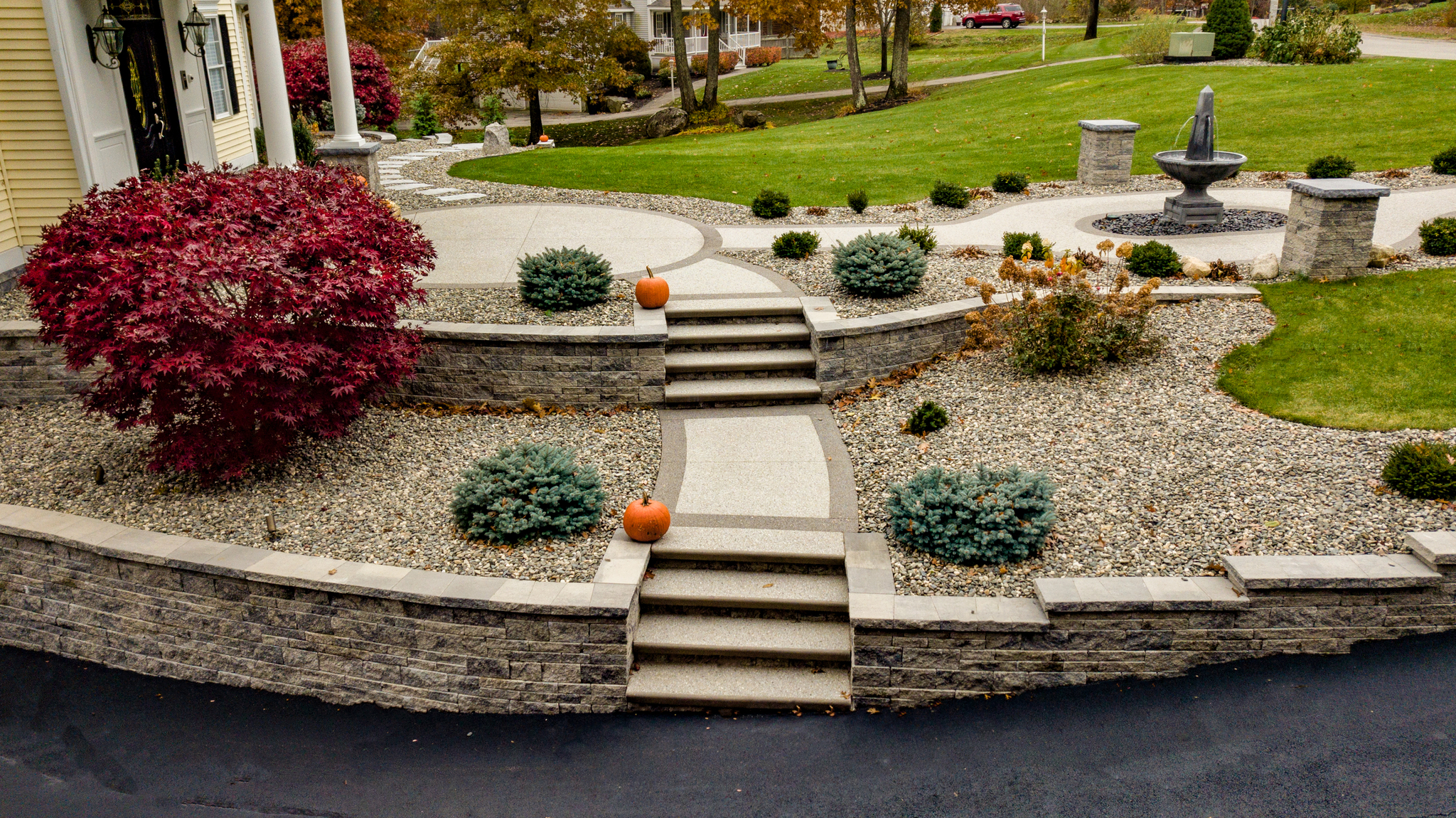
Retaining walls are usually seen as purely functional — a way to hold back soil or create flat levels on a sloped yard. But when designed thoughtfully, they become one of the most beautiful and versatile features in your outdoor space. A retaining wall can act as seating, define garden beds, support patios, frame walkways, or highlight elevation changes in a stunning way.
At Vicente Outdoor Living, we design retaining walls that enhance both the structure and the aesthetics of a yard. If you’re planning a wall or thinking about redesigning your outdoor space, here’s how to make your retaining wall feel perfectly connected to the rest of your landscape.
A retaining wall looks best when it feels like an extension of your hardscape — not an afterthought.
Consistency creates a seamless, high-end look.
Outdoor spaces are more functional when each zone feels intentional.
Even a small wall creates structure and helps guide movement throughout your yard.
If your yard has elevation changes, multi-level retaining walls can turn those challenges into beautiful design elements.
This design works especially well with patios or outdoor kitchens.
A retaining wall becomes even more useful when built at seating height.
They offer built-in seating without taking up extra space.
Lighting transforms a retaining wall into a nighttime showpiece.
Lighting makes your outdoor space both beautiful and usable after dark.
One of the best ways to soften a retaining wall is by incorporating plants.
This creates balance between hardscape and softscape.
If your retaining wall changes elevation, built-in steps add both function and beauty.
Integrated steps improve flow and accessibility.
A well-designed retaining wall doesn’t overpower the space — it complements it.
Proportion makes a big difference in overall design.
Straight walls feel structured and modern, but curves add elegance and motion.
Curved retaining walls blend seamlessly into the landscape.
Sometimes mixing materials creates the most unique effects.
This adds depth, texture, and personality.
Retaining walls can raise or frame entertainment areas, giving them a dramatic feel.
Outdoor kitchens especially benefit from the structure of surrounding walls.
Retaining walls require:
Professionals create walls that are both visually stunning and structurally sound.

Tell us your vision, and we’ll design a retaining wall that brings harmony and structure to your backyard.


