



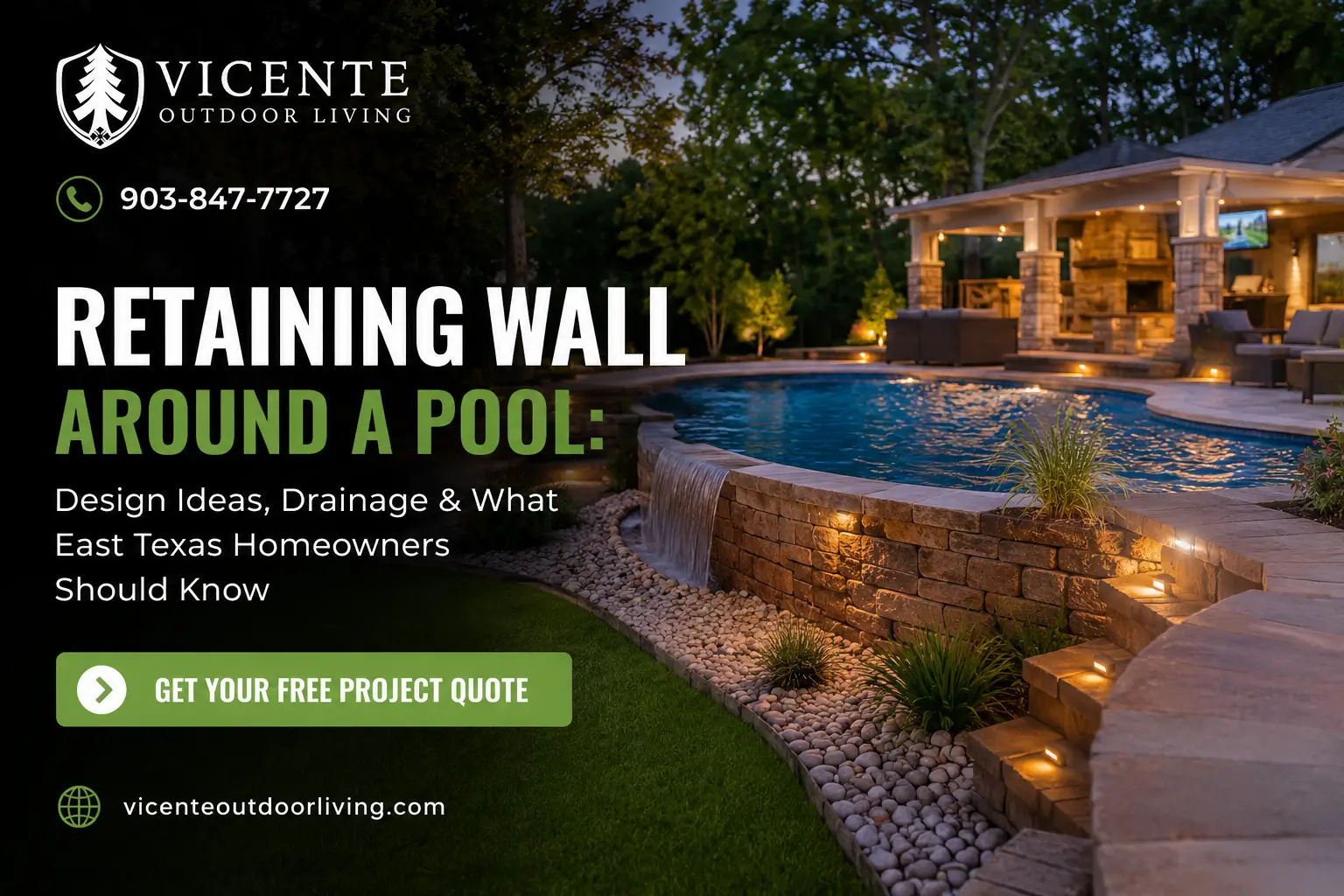
A retaining wall around pool areas can manage grade changes, hold back soil, create usable deck space, frame landscaping, and give the pool area a finished architectural look.
For homeowners in Tyler, Bullard, Hideaway, and nearby East Texas communities, a successful pool retaining wall must work with the slope, drainage, pool deck, surrounding landscape, and the way water moves through the property.
That matters especially when a pool sits below a higher yard or near a hillside. A retaining wall next to pool areas must be planned carefully because drainage and placement affect the wall, hardscape, and usable space.
Vicente Outdoor Living designs and builds custom outdoor environments throughout East Texas. For homeowners considering a retaining wall around swimming pool areas, the goal should be a solution that feels like part of the overall landscape rather than a separate structural element.
A retaining wall for pool areas is often used when the property is not naturally flat enough for the desired pool deck or outdoor living layout. It can hold back higher ground or create a level terrace for seating, landscaping, or walkways.
Common reasons include:
A well-planned retaining wall installation can combine these practical needs with a design that complements the home and pool area.
The best retaining wall around pool ideas depend on grade, space, architecture, materials, and how the backyard will be used.
A retaining wall behind pool areas can create a clean boundary between the swimming zone and a higher section of the yard.
This works well when the backyard rises away from the house while leaving the pool deck open.
Planting beds above the wall can soften the structure and create a layered landscape. When planning a pool retaining wall landscape, also consider roots, irrigation, drainage, and maintenance access.
A retaining wall for sloped pool area conditions does not always need to be one tall structure.
Multiple lower walls can create terraces for landscaping, stairs, seating, or pathways while reducing the visual impact of one large structure.
Some retaining wall ideas around pool areas can serve both structural and social purposes.
A low wall near the pool deck can sometimes function visually like built-in seating. The right height, cap, and placement can create a practical edge for gatherings.
This works particularly well when the wall is coordinated with custom patios and nearby entertainment areas.
A stone retaining wall around pool spaces can give the backyard a more organic and upscale appearance.
Stone works well with natural landscaping, mature trees, and homes that suit warmer, textured materials. Pairing it with stone coping, pavers, or landscape accents can create a consistent palette.
Retaining wall blocks around pool areas can provide a clean, structured appearance and are available in a wide range of shapes, textures, and tones.
Segmental wall systems can suit curved or straight layouts and coordinate with pavers. The exact system should match wall height, soil, drainage, and design goals.
Drainage is one of the most important parts of a swimming pool retaining wall.
Water pressure can build when rainwater or irrigation collects behind a wall. East Texas weather makes this especially relevant because heavy rain can occur in short periods.
A retaining wall near pool areas may need drainage stone, pipe, filter fabric, or another site-specific drainage approach. The right solution depends on the wall, soil, slope, and safe discharge location.
Water should be directed away from the wall and from areas where it could create problems near the pool, patio, house, or neighboring property.
This is why retaining wall installation in Tyler TX should begin with a site evaluation rather than material selection alone.
A retaining wall around inground pool areas is often part of a larger grading plan.
Before construction, evaluate the relationship between the wall and the pool. Important considerations include:
The wall should leave enough room for circulation, furniture, and safe access.
For homeowners planning a broader project, Vicente Outdoor Living's outdoor design services can help coordinate the wall with the rest of the backyard.
An above ground pool retaining wall may be useful when the pool sits partially within a slope or when the surrounding grade needs to be managed.
The retaining wall and pool should be treated as separate systems with appropriate spacing, drainage, and access. On sloped lots, the goal is to create a stable transition while preserving maintenance access around the pool.
Material choice affects both appearance and performance.
Concrete retaining wall systems can create a clean, refined look and coordinate with pavers, patios, and other hardscaping features.
Natural stone creates a more organic appearance and works well with existing stone, natural terrain, or informal landscape features.
Concrete walls can suit contemporary spaces, especially when finishes, caps, and nearby hardscape are coordinated. Material choice should follow structural, drainage, and design needs.
A retaining wall should not look like an afterthought in a luxury backyard. Details around it make a major difference.
Repeating a stone, paver, or color already used around the pool can visually connect the wall to the rest of the space.
Low-voltage lighting can highlight wall texture, steps, and planting beds after dark. It can also improve visibility around elevation changes.
Layered shrubs and accent plants can soften the wall without hiding it completely.
Vicente Outdoor Living's landscaping services can help coordinate plantings with hardscape and pool-area design.
A well-chosen wall cap can make retaining wall blocks around pool areas feel more complete. Caps can also help tie the wall visually to coping, pavers, or nearby steps.
Placement affects both function and appearance.
A retaining wall next to pool areas may define a deck edge or support a nearby slope. A retaining wall behind pool areas often holds back a higher grade and frames the view beyond the pool. The right placement depends on the property's slope and circulation.
A thoughtful design should also consider sightlines from the house. If the wall will be visible from large windows, patios, or outdoor seating areas, appearance becomes especially important.
Landscaping can turn a functional wall into a more finished outdoor environment.
Raised planting areas can bring color and texture into the pool zone.
Decorative stone can create clean transitions around planting areas near the wall.
On sloped properties, integrated steps can connect the pool deck with an upper lawn, pergola, garden, or another outdoor living zone.
A nearby pergola can add shade and define a separate lounge area beside the wall.
When comparing retaining wall contractors in Tyler TX, look beyond appearance. Ask how the contractor evaluates:
The contractor should also explain how the wall fits into the larger outdoor environment.
Vicente Outdoor Living takes a design-build approach that can coordinate retaining walls with pool areas, patios, landscaping, turf, structures, and other outdoor improvements. Homeowners can explore completed outdoor projects and review local customer experiences on Vicente Outdoor Living's Google Business Profile.
Retaining wall installation in Tyler TX should respond to the actual conditions of the property.
Homes in Tyler, Bullard, Hideaway, The Cascades, Hollytree, Eagles Bluff, Oak Creek, and Cooks Crossing can have very different slopes and pool layouts. A retaining wall around pool in East Texas should be designed after reviewing grade, soil, drainage, access, and surrounding features.
Seek professional input when the wall is tall, close to a pool structure, supporting a significant slope, showing drainage problems, or part of a major remodel. Local requirements can vary by wall height, location, and site conditions, so engineering or permitting may need to be evaluated for the specific project.
A well-designed retaining wall can make a difficult pool site more usable and attractive. The best results come from planning drainage, landscaping, and hardscape together.
If you are considering a retaining wall around pool areas in Tyler, Bullard, Hideaway, or another East Texas community, contact Vicente Outdoor Living to discuss the property, slope, drainage, materials, and design goals.
Yes, but the wall location should be planned carefully. Distance from the pool, wall height, soil conditions, drainage, excavation, and structural requirements can all affect the design.
In most situations where a wall is retaining soil, managing water behind the wall is important. The appropriate drainage system depends on the specific site, wall type, soil, slope, and discharge location.
Concrete block, natural stone, and finished concrete can all work well. The best option depends on wall height, engineering needs, drainage, architecture, pool-deck materials, and the desired appearance.
Yes. A retaining wall for sloped pool area conditions can help create level terraces and usable outdoor space. Some properties may benefit from several lower walls rather than one large wall.
Often, yes. Raised beds above the wall can soften the design, but plant roots, irrigation, drainage, and long-term maintenance should be considered before planting.
Some low wall designs can provide a seating-like edge or be coordinated with dedicated seating features. The height, cap, location, and safety of the layout should be planned around how people will use the pool deck.
If the yard rises significantly behind the pool, soil is moving toward the deck, drainage is difficult to manage, or the slope limits usable space, a retaining wall may be worth evaluating. A site visit can determine whether a wall is appropriate.
Vicente Outdoor Living provides retaining wall installation in Tyler TX and surrounding East Texas communities. Homeowners can request an on-site consultation to discuss slope, drainage, materials, wall placement, and how the project should integrate with the rest of the outdoor space.


